
Chandahandi, July 8: The cultural landscape of Odisha witnessed a memorable literary celebration as Ghumara Sahitya Utsav 2026 was organised with great enthusiasm at Panabeda College, Chandahandi, in Nabarangpur district. Jointly organised by Panabeda Sahitya Sansad and the Odisha Sahitya Akademi, the festival brought together eminent writers, poets, scholars, artists, academicians, students and literature enthusiasts from different parts of the state. More than a literary gathering, the event emerged as a celebration of Odisha’s linguistic heritage, tribal culture and the growing literary movement in the rural and peripheral regions of the state.
The festival was conceived with the objective of creating a vibrant literary platform outside metropolitan centres, encouraging young writers and recognising the immense creative potential of Odisha’s villages. Throughout the day, the programme featured inspiring speeches, literary discussions, book releases, quiz competitions, award presentations, poetry recitations and cultural performances, attracting a large audience.
The inaugural session was graced by former Odisha Minister Ramesh Chandra Majhi as the Chief Guest. Nalini Das, Principal of Panabeda College, attended as the keynote speaker, while Sumitra Pujari, Chairperson of Chandahandi Panchayat Samiti, and Dharmaraj Majhi, Block Development Officer of Jayapatna, joined as Guests of Honour. Eminent litterateur Dr. Manoj Kishore Nayak presided over the session. The programme commenced with a welcome address and introduction of guests by Purushottam Pari.
In his inaugural address, Ramesh Chandra Majhi appreciated the efforts of Panabeda Sahitya Sansad in taking literature to the grassroots. He said that literature has always played a vital role in preserving the identity of society and strengthening cultural values. He observed that the tribal and rural regions of Odisha possess a rich repository of oral traditions, folklore and indigenous knowledge, which deserve greater attention in mainstream literary discourse. Congratulating the organisers, he remarked that organising such a prestigious literary festival in Chandahandi was itself a significant achievement. He urged young people to develop a habit of reading, writing and preserving their mother tongue, adding that literature has the power to transform individuals and society alike.
The keynote speaker Nalini Das highlighted the importance of educational institutions in nurturing literary culture among students. He encouraged students to actively participate in creative writing, debates and literary forums to strengthen their intellectual and cultural foundations.
The Guests of Honour, Sumitra Pujari and Dharmaraj Majhi, also appreciated the initiative and emphasised that literature and culture play an essential role in social development. They expressed hope that such festivals would continue to inspire young generations to remain connected with their language and heritage.
One of the most inspiring moments of the inaugural session was the presidential address delivered by Dr. Manoj Kishore Nayak, Founder of Panabeda Sahitya Sansad. Reflecting on the remarkable journey of the organisation, he narrated how Panabeda Sahitya Sansad had started as a small literary initiative driven by a handful of passionate writers and literature lovers. With determination, community support and an unwavering commitment to literature, the organisation gradually evolved into a recognised literary institution.
Dr. Nayak said that the dream behind establishing Panabeda Sahitya Sansad was to create opportunities for talented writers from rural and tribal regions who often remained unnoticed despite their remarkable literary abilities. Over the years, the organisation has organised literary meetings, poetry recitations, seminars, cultural programmes, book releases and publications, providing a platform for both established and emerging authors.
Describing the present festival as a historic milestone, Dr. Nayak said that hosting an event in collaboration with the Odisha Sahitya Akademi was a matter of immense pride not only for Panabeda Sahitya Sansad but also for the entire Nabarangpur district. He remarked that the recognition of literary activities in a remote region sends a powerful message that literature belongs to every village and every community.
He further appealed to young writers to remain connected with their roots and write about the lives, traditions, languages and struggles of ordinary people. According to him, authentic literature emerges from real experiences and cultural memory. He stressed that every village has untold stories waiting to be documented and every generation carries a responsibility to preserve its literary heritage for the future.
The second session was equally inspiring. It featured renowned litterateur Krushna Singh as the Chief Guest, Bulu Hota as the keynote speaker, and Khemraj Bagh and Ganeshwar Nayak as Guests of Honour. Purushottam Pari presided over the session while Biranchi Narayan Dash coordinated the proceedings.
In his address, Krushna Singh delivered a powerful message on the future of Odia literature. He observed that the strength of literature lies not only in cities but in the villages where language continues to live in its purest form. Appreciating the organisers, he remarked, “The enrichment of literature should begin from the peripheral regions. I congratulate the people of Panabeda for creating history by hosting an Odisha Sahitya Akademi programme for the first time. Such initiatives strengthen the literary movement across Odisha.”
He further stated that the future of Odia literature depends upon encouraging young writers from rural and tribal communities. According to him, local dialects, folklore, oral traditions and indigenous knowledge systems should receive greater space in contemporary literature. He urged writers to remain socially responsible and use literature as a medium to promote harmony, humanity and cultural pride.
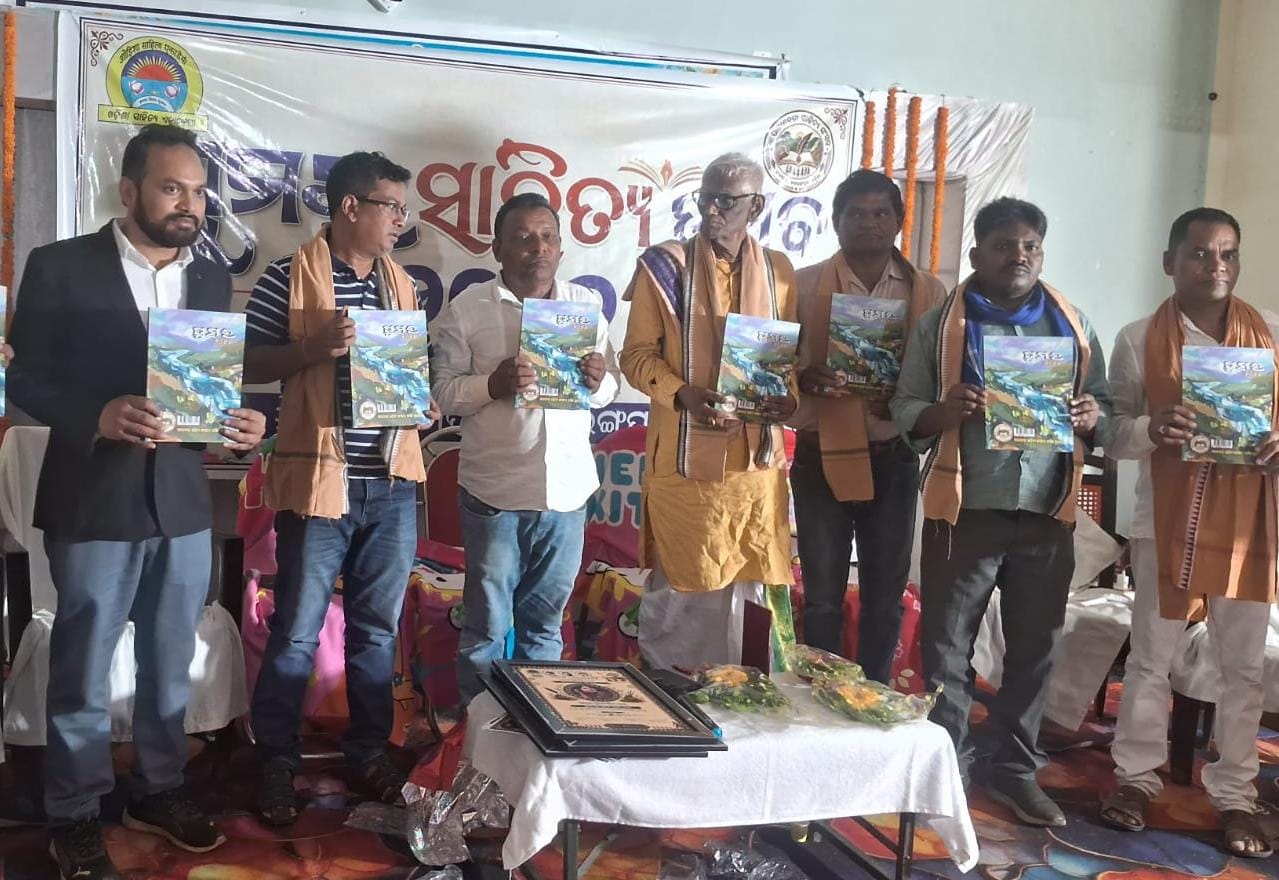
The festival also witnessed the ceremonial release of three important literary publications. These included “Bedanara Pratishabda” by Biranchi Narayan Dash, “Neela Nishitha” by Dr. Sumanta Kumar Padhi, and “Ghumara 2026,” the annual literary journal of Panabeda Sahitya Sansad. The distinguished guests appreciated the authors and described the publications as valuable additions to contemporary Odia literature.
A literary quiz competition was organised in three categories—School, Higher Secondary and Undergraduate—to encourage students to deepen their knowledge of Odia language, literature, history and culture. Students from various educational institutions participated enthusiastically, reflecting the growing interest among the younger generation in literary activities.
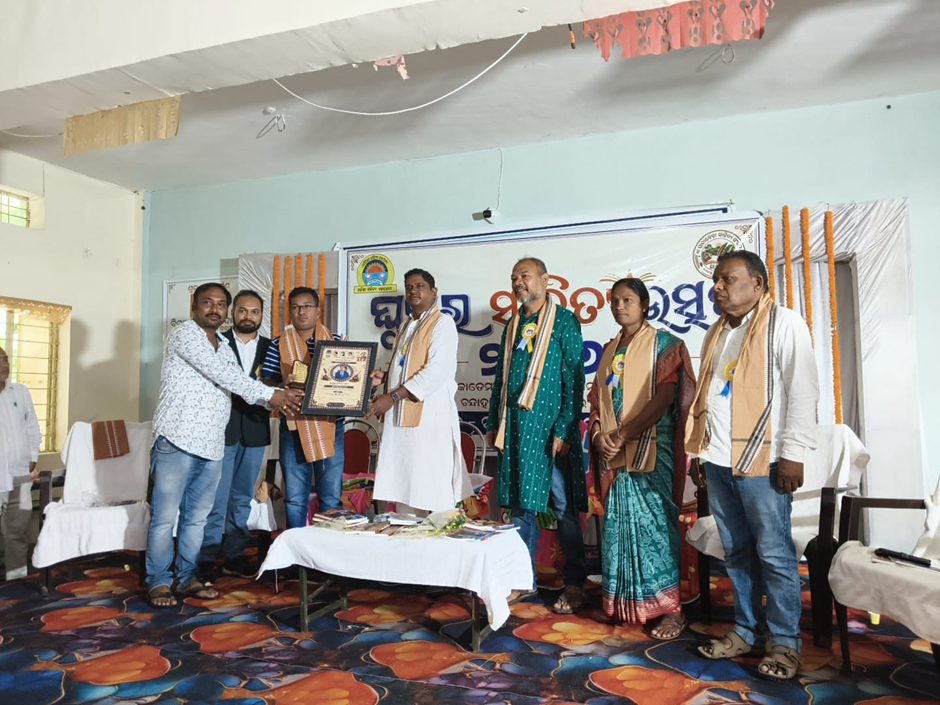
The presentation of the Ghumara Literary Awards 2026 was one of the highlights of the festival. The prestigious Ghumara Shree Samman 2026, the highest honour of the organisation, was conferred upon Krushna Singh in recognition of his outstanding contribution to Odia literature.
Other distinguished awardees included Ashok Kumar Pattnaik, who received the Ghumara Lifetime Literary Achievement Award; Binod Kumar Goyal and Dr. Sumanta Kumar Padhi, honoured with the Ghumara Poetry Award; Tularam Jagat, recipient of the Ghumara Folk Song Award; Gopal Maharana, honoured with the Ghumara Theatre Award; Rabindranath Joshi, recipient of the Ghumara Essay Award; Dharmaraj Majhi, honoured with the Ghumara Short Story Award; and Priyanka Priyadarshini Ray, who received the Ghumara Young Talent Award 2026.
The festival also featured three literary discussion sessions where writers exchanged views on contemporary Odia literature, regional writing, tribal literary traditions and the responsibilities of modern authors. Poetry recitation sessions provided an opportunity for poets to present original compositions exploring themes of love, humanity, nature, social justice and cultural identity.
Adding further colour to the celebration, local artists displayed paintings and traditional artworks depicting the cultural richness of western Odisha. The exhibition attracted widespread appreciation and highlighted the close relationship between literature, art and cultural heritage.
The organisers acknowledged the dedicated efforts of volunteers and supporters, including Durga Padhi, Bishnupriya Karasudha Pattnaik, Prabhanjan Tripathy, Swagatika Sahu, Gurudasi Mandal, Santosh Khamari, Bishwaranjan Panda, Gautam Kachim, Kadambini Beshra, Deepak Gopal and Chatur Gahir, whose contributions ensured the smooth and successful conduct of the festival.
Concluding the programme, the organisers thanked the Odisha Sahitya Akademi, invited dignitaries, authors, artists, students, volunteers and literature lovers for making the event a grand success. They reaffirmed their commitment to strengthening literary movements in rural Odisha and creating more opportunities for emerging writers from tribal and peripheral regions.
With inspiring speeches, meaningful literary discussions, prestigious honours, book releases and enthusiastic public participation, Ghumara Sahitya Utsav 2026 concluded as a landmark event in Odisha’s literary calendar. The festival reaffirmed that the future of Odia literature lies in empowering grassroots voices and celebrating the creativity, culture and collective wisdom of rural communities.
